Where Neurotech Meets Hope: A Deep Dive into how a Cambridge NeuroWorks Fellowship has helped Myonerv CEO Sam Kamali
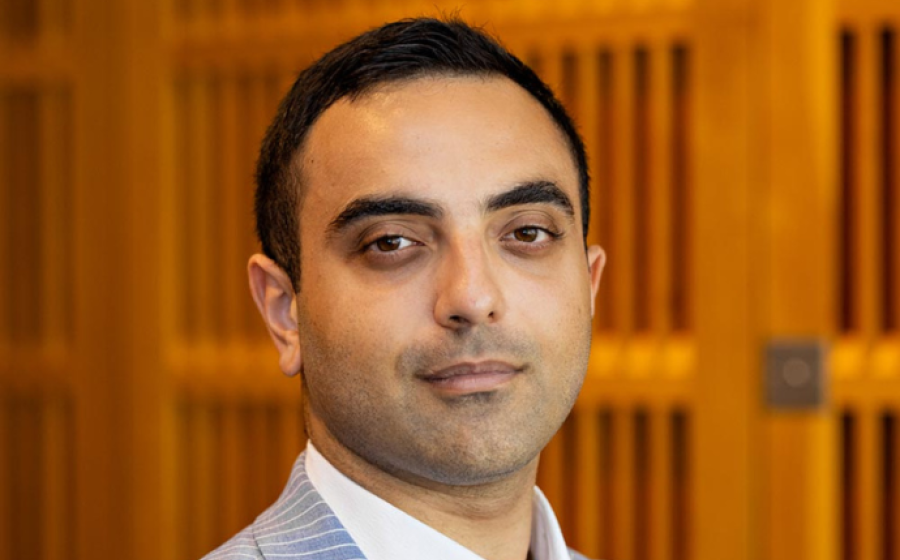
Cambridge NeuroWorks’ Sam Kamali discusses the journey behind Myonerv, their innovative neurotechnology, team collaboration, and the importance of patient engagement.
Introducing Myonerv and Its Mission
Interviewer: Sam, what first inspired you to begin this journey into neurotechnology?
Sam: For the last year, my Cambridge NeuroWorks (CNW) fellowship has funded our work at Myonerv which involves pioneering a wearable neurostimulator designed to remotely monitor and treat stroke-induced paralysis. My journey in neurotechnology began at age 11, when my cousin suffered a stroke at school, leaving him paralysed. We were very close, almost like twin brothers, and witnessing his struggle profoundly shaped my life. This personal experience drove me to study neuroscience, medical device design, and entrepreneurship, all with the aim of helping him and others like him.
Over the years, I saw that his challenges weren’t unique; millions face similar isolation and frustration after a stroke. Conventional electrical stimulators are bulky, with long wires and sticky electrodes, discouraging consistent use. That’s why we’ve engineered a device with a high-density array of reusable polymer electrodes, comfortably worn as a band around the arm. Results are promising with up to 60% increase in functional strength after only two weeks, thanks to precise, real-time stimulation tailored to each patient’s muscles.
How Does Remote Therapy Work?
Sam: Our system enables remote pairing between physiotherapists and patients. Severely paralysed patients, or anyone wanting an extra boost, can virtually connect with a specialist, who can mirror their movements into the patient’s hand. This approach transforms loved ones and therapists into active participants, not just passive observers. It’s about empowering patients to continue their exercises between sessions, tracking progress, and facilitating a smoother transition from hospital to home.
We’re also at the forefront of developing virtual neurorehabilitation clinics. Currently, only 10% of physiotherapy is delivered virtually, but NHS medical directors have signalled a mandate to expand this. We believe Myonerv can play a crucial role in this shift.
Partnerships and Clinical Trials
Interviewer: You're working with various organizations—can you elaborate on your partnerships and progress so far?
Sam: The big benefit of CNW is the chance it gives you to connect into a larger UK ecosystem for technology incubators, clinicians, founders' mentorship, and additional funding. We’re proud to be part of the Innovate UK Biomedical Catalyst Accelerator, in partnership with Founders Factory, Accelerate@Babraham and the MedTech SuperConnector – an Imperial College London based accelerator focused on MedTech, in collaboration with Orthopaedic Research UK. We’ve secured collaborations with the University of Cambridge Engineering Department and Cambridge and Peterborough NHS Foundation Trust (CPFT), who are looking to sponsor our upcoming clinical trials, fully costed and NIHR-approved. Charing Cross Hospital has expressed interest, supporting up to 1,200 patients yearly. The Stroke Association and East of England stroke clubs are also supporting us, with valuable patient feedback collected by CPFT.
Financially, we’ve raised over £215,000 in the past year from a range of sources, including ARIA, friends, family and Innovate UK. We’ve won multiple awards, most recently at RESI London in December 2025, and have built and tested multiple device prototypes. The next step is raising £2 million to develop our alpha prototype and conduct feasibility studies, paving the way for regulatory approval.
Meet the Team Behind Myonerv
Interviewer: Do you have an in-house manufacturing team, or do you work with external partners?
Sam: Our team is small but highly skilled. Alongside myself—a University of Cambridge and Cambridge NeuroWorks Fellow —my co-founder George Gryparis is a PhD student specialising in advanced circuit design for neurotechnology. For manufacturing, we collaborate with the Manufacturing Technology Centre (MTC), who are leading the current iteration of our wearable. We’re also considering other engineering firms and work with regulatory consultants and Health Innovation East for commercialization advice.
Engaging Patients and Shaping Pricing
Interviewer: Are you involving patients and clinicians in the development process?
Sam: Yes, patient and public involvement is central to our work. The Windsor Research Unit at Cambridgeshire and Peterborough NHS Foundation Trust assigns specialist nurses to support our patient engagement, helping us gather feedback at stroke clubs and inform our clinical trials. This feedback shapes everything from device design to pricing.
Looking Ahead
Sam: Ultimately, our vision is to make advanced neurorehabilitation accessible and equitable, empowering patients as people, and clinicians alike. With the combined support of our partners, patients, and a dedicated team, we’re excited to drive meaningful change in stroke recovery.