Moonshot Thinking: Dr. Ben Underwood’s Vision for Clinical Synergy at Cambridge NeuroWorks
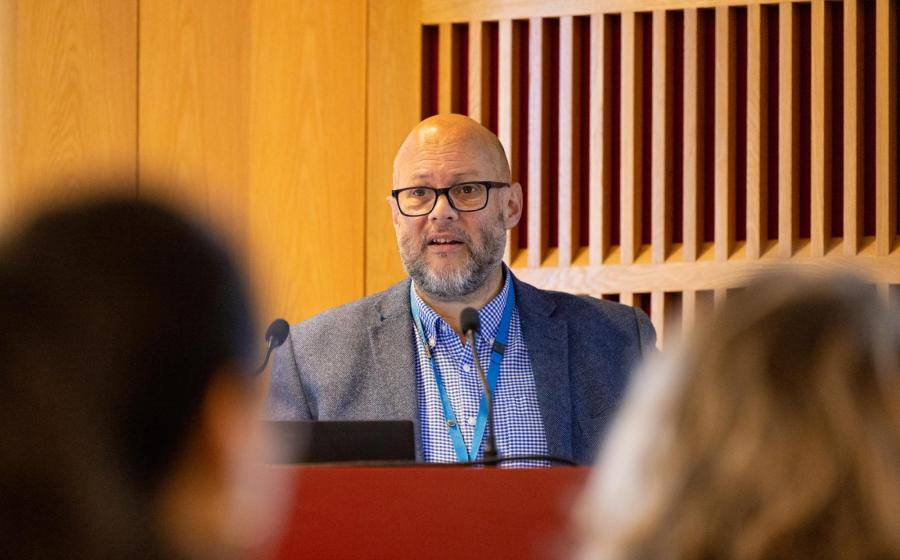
Dr. Ben Underwood, Clinical Lead at Cambridge NeuroWorks and Director of Research and Development at Cambridgeshire and Peterborough NHS Foundation Trust, discusses how bridging the gap between engineering and clinical practice through patient engagement and streamlined governance can transform the future of dementia care.
Interviewer: Can you tell me a bit about your involvement with Cambridge NeuroWorks?
Dr Ben Underwood: It might be interesting to know how I ended up involved in Cambridge NeuroWorks. At heart, I am an old age psychiatrist working with people over the age of 65, and I have a particular interest in dementia. I have a mixed professional background; I hold roles at the Royal College of Psychiatrists, but I have also been a health service manager, serving as a clinical director and the Deputy Medical Director for Cambridgeshire and Peterborough NHS Foundation Trust (CPFT). That gave me a clear idea of the practical difficulties and bottlenecks within actual clinical services.
Five years ago, I moved to the University of Cambridge as an Associate Professor in Applied and Translational Old Age Psychiatry. Being at the "translational" end means I focus on application rather than pure theory. I look at how we can apply artificial intelligence (AI) to make clinics run smoothly and determine which new drug treatments we should trial for Alzheimer’s disease.
During COVID, I was involved in vaccine trials with NHS partners across the Cambridge Biomedical Campus, which allowed me to meet many people working across different disciplines. I am also the Research and Development (R&D) Director for CPFT, so I have a strong background in the governance and law surrounding clinical trials.
When Cambridge NeuroWorks was formed, they wanted an engineering lead and a clinical lead to help rapidly move tech into patient care. George Malliaras, a world-class academic, leads the engineering side, and I serve as the clinical lead to ensure that people developing new technology can take it from the engineering lab into trials to make a difference for NHS patients. Cambridge NeuroWorks is an Activation Partner of the Advanced Research and Invention Agency (ARIA) - the UK R&D funding agency built to unlock scientific and technological breakthroughs that benefit everyone.
Public Engagement and the POPPED Portal
Interviewer: You’ve clearly been involved with a lot of Patient and Public Involvement and Engagement (PPIE).
Dr Ben Underwood: Yes, I am completely convinced that PPIE makes science and medicine better.
I previously did some work on Huntington’s disease. We were very focused on trying to control the abnormal movements associated with the disease, but we discovered the patients weren't actually as bothered by that—they found ways to adapt. What really troubled them was their mood, irritability, and depression, but no trials with antidepressants were running. That was a salutary lesson: we were trialling things patients didn’t really want when they could guide us on where best to focus .
Since then, I’ve become very involved in engagement. I set up a website called POPPED, which is an online portal for public engagement and involvement in dementia research. We’ve had about 10,000 people tell us what they think of various research projects. To me, that is real engagement. Dementia is a societal problem; it affects everyone, not just the patient and their immediate family. The site has been running for a year and is used by researchers from Cambridge, Edinburgh, Oxford and London, as well as scientists at the Dementia Research Institute. In Cambridge NeuroWorks, my view is that as soon as you have an idea, you need to talk to the patients and families who experience the condition before you start going down the wrong path.
The shift in industry and academic medicine
Interviewer: It sounds like you're adopting an industry-style approach to addressing market needs.
Dr Ben Underwood: Ten years ago, big pharmaceutical companies didn’t have much community engagement, but now they do, so industry has actually caught up.
Similarly, in academic medicine, there used to be limited patient involvement. Now, we are moving towards real scale and an "equity of power" where patients set the priorities. From an engineering perspective, you should start by talking to the users to understand the nature of the problem before you engineer the solution.
Governance and ethics in neurotech
Interviewer: Are you involved in any ethics committees regarding the burgeoning neurotechnology market?
Dr Ben Underwood: I don’t sit on a specific ethics committee, but as the R&D Director for a large NHS trust running 160 studies at any given time, I ensure that research governance keeps people safe and uphold standards for high quality research daily.
You need professional R&D officers to provide objective advice to support people developing new technology. Ethics is just one part of governance. You also need a sponsor, appropriate insurance, peer reviews for scientific validity, and navigation through the Integrated Research Application System (IRAS). It’s complicated with many checks and controls to keep the people taking part in research safe, and our team is there to take researchers by the hand and walk them through it.
Interviewer: Could you envisage Cambridge NeuroWorks being a leading voice in high-level neurotech ethics?
Dr Ben Underwood: Absolutely. I see two ways we can contribute. First, by galvanizing the community. Ethics and patient engagement are related; it’s essential to tailor our research to priorities set by patients and their unmet needs. Cambridge NeuroWorks can be a hub for that engagement at scale.
Secondly, because governance is so complex, people often avoid talking about it. Cambridge NeuroWorks can link people with similar interests globally to create "exemplars." We can show how to streamline governance and ethics without minimising them. Cambridge NeuroWorks can demonstrate how to work at a speed that fits an entrepreneurial approach while maintaining high standards and safety.
The "Moonshot" philosophy
Interviewer: What has been your experience so far with Cambridge NeuroWorks, and what are your plans for the future?
Dr Ben Underwood: I’ve really enjoyed it and like the approach of investing in people—if you get the right people, they will do good things. I also love the "moonshot" thinking. Incremental science is worthwhile, but lifting your gaze to the horizon and aiming for transformative jumps is vital to advance healthcare and improve lives.
The classic example that changed my thinking was the COVID-19 vaccines. Most people said it couldn't be done that quickly, or at all. But people tried and worked tirelessly, and the Oxford vaccine we trialled in Cambridge has saved millions of lives and helped to restore the global economy.
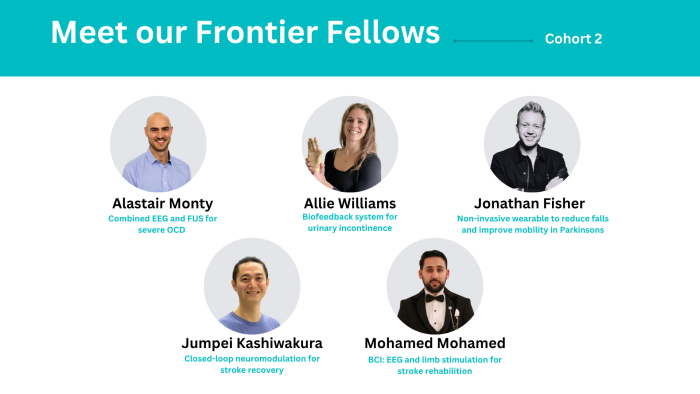
The potential in neurotech is huge and largely untapped. The environment can be pressured and frenetic because we’re trying to build things in six weeks rather than six years, but I enjoy that fast pace—it reminds me of working in A&E. We have great fellows, we’re building a community, and we’re putting British neurotech on the global map. The fact that Cambridge NeuroWorks exists gives people a mission to collaborate on and I’m enthusiastic about the future.