From basic science questions to exploring research avenues related to mental health - how Cambridge NeuroWorks helped me implement one of the new research directions
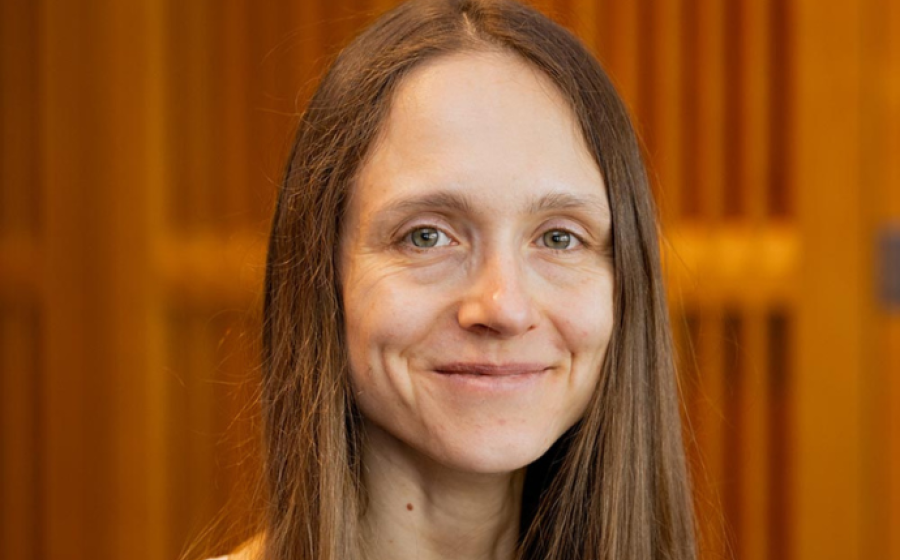
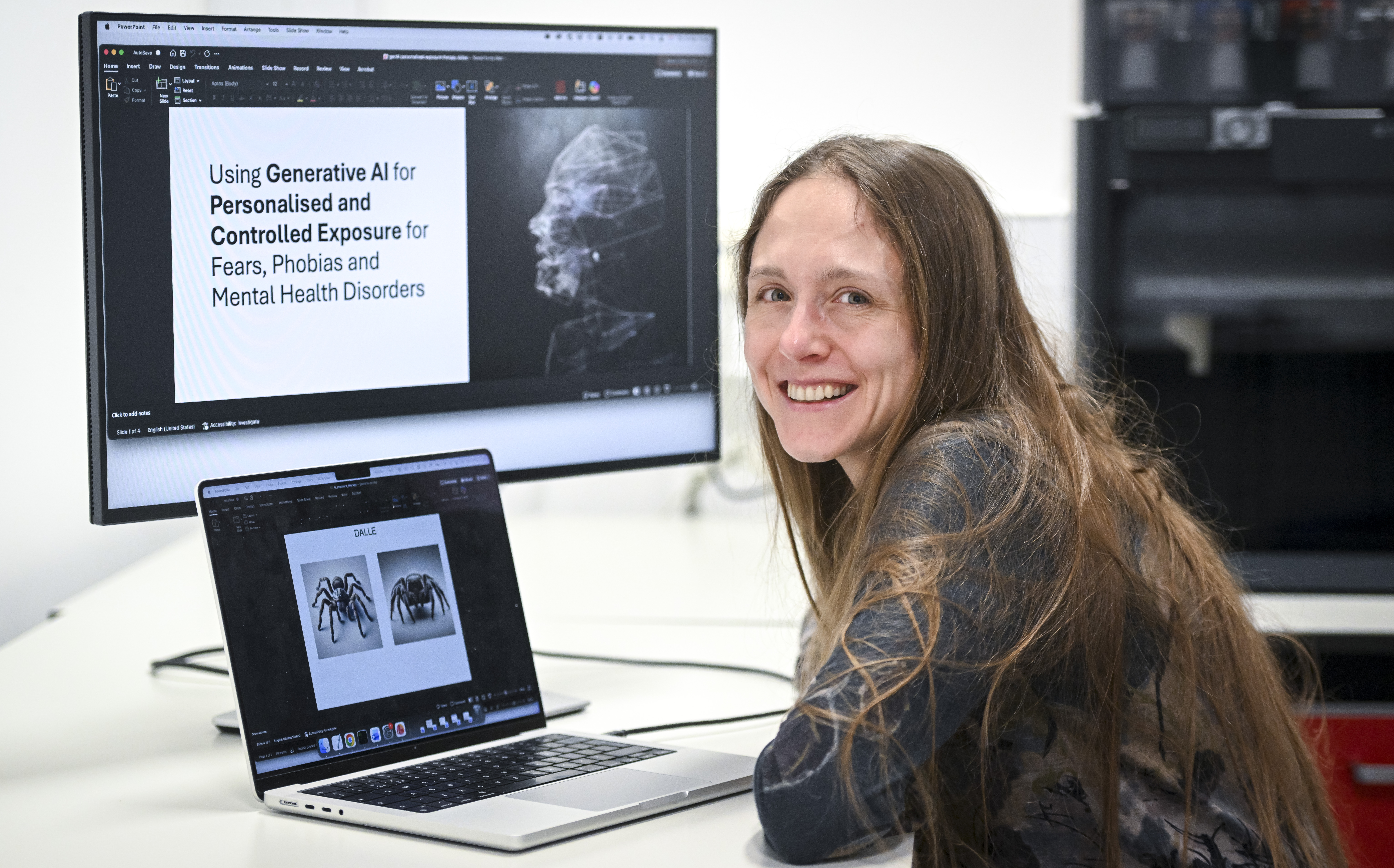
In the evolving neuroscience landscape, bridging basic research and clinical application is challenging. For Kamila Maria Jozwik PhD, who does research in visual cognitive computational neuroscience and Neuro AI, Cambridge NeuroWorks (funded by ARIA) accelerated this journey through carrying out a Blue Sky Fellowship, based at the Maxwell Centre, University of Cambridge. Combining strategic networking and industrial exposure, the programme expanded her research programme and mindset. Kamila’s research involved studying how we could use generative-AI for personalised and gradual exposure therapy.
Breaking the silos
Interviewer: To start us off, Kamila, how has your experience with Cambridge NeuroWorks shaped your journey so far?
Kamila Maria Jozwik: It has been an interesting experience. Before I joined the NeuroWorks fellowship, my research was almost exclusively contained within the academic environment. I was focused on studying healthy populations, specifically looking at visual cognition. I very much value basic science. I appreciate though that academia can sometimes become disconnected from the broader ecosystem of technology and clinical application.
Cambridge NeuroWorks acted as a bridge. It forced me to think about neurotechnology in a much deeper, more practical sense. I started asking questions I hadn’t seriously considered before: How do these ideas move from a lab to a user? What does the industry look like beyond an academic viewpoint?
Interviewer: You mentioned expanding your research into mental health. How did the programme facilitate that specific shift from healthy populations to clinical ones?
Kamila Maria Jozwik: That was one of the most significant practical benefits of the programme. For a long time, I’ve been interested in how our perception of the world and how we build concept knowledge changes in the context of mental health conditions. However, as an academic, gaining access to clinical populations can be a challenge logistically if you don't have the right institutional connections.
Cambridge NeuroWorks provided those connections. Through Dr Ben Underwood, I was linked with the Cambridgeshire and Peterborough NHS Foundation Trust (CPFT), which is a major mental health service provider. This link was the catalyst I needed. I was able to conduct Patient and Public Involvement (PPIE) activities, talking with people who live with these conditions. Their insights were invaluable. They helped shape the design of my study on using generative AI for personalized and gradual exposure therapy. It moved the project from a theoretical exercise to a human-centric potential future intervention.
Embracing the "fail fast" mentality
Interviewer: One of the unique aspects of Cambridge NeuroWorks is its emphasis on a "fail fast" mentality, which is quite different from traditional academia. How did that impact your mindset?
Kamila Maria Jozwik: In academia, there is pressure to make every project a success, which leads to working on ideas for years pushing them forward even when they aren't working, because we fear that a "failed" project is a waste of time.
I see that in the startup and industry world, failing could be seen as a way of gathering data. If an idea doesn't work, you pivot. You don't take it personally. If a specific research direction fails, it’s just a sign that I’ve learned something important about what doesn't work. This "fail fast" approach actually saves time in the long run. We should be publishing our "failures" so that other researchers don't spend years duplicating work that leads nowhere. If we share all our outputs the field moves forward much faster.
Looking towards the future
Interviewer: How will your time with the fellowship influence your next steps?
Kamila Maria Jozwik: I will take into account my clinical, industry, and philanthropy experiences when designing our research and thinking about funding. Cambridge NeuroWorks experience has taught me that if one is interested in research translation it is not only about what happens in the lab. It’s about understanding the economics, the ease of integration into the NHS, and the practicalities of how a patient will actually use a device. I used to think that if a study worked in the lab, people would adopt it, just because it is effective. Now I know it’s much more complicated than that. You have to think about the whole pathway to translation from day one.
Interviewer: Finally, what advice do you have for researchers who are currently where you were a few years ago?
Kamila Maria Jozwik: The most important thing is curiosity. If you are genuinely curious about a problem, that motivation will carry you through the difficult moments that are an inevitable part of research. Don't let the fear of a potential "failure" stop you from exploring and talking to people to challenge your ideas. What makes doing research energising for me on a daily basis is working with people who think deeply about problems and are kind.