Cambridge NeuroWorks named “Tech for Good” winner for advancing breakthrough neurotechnology
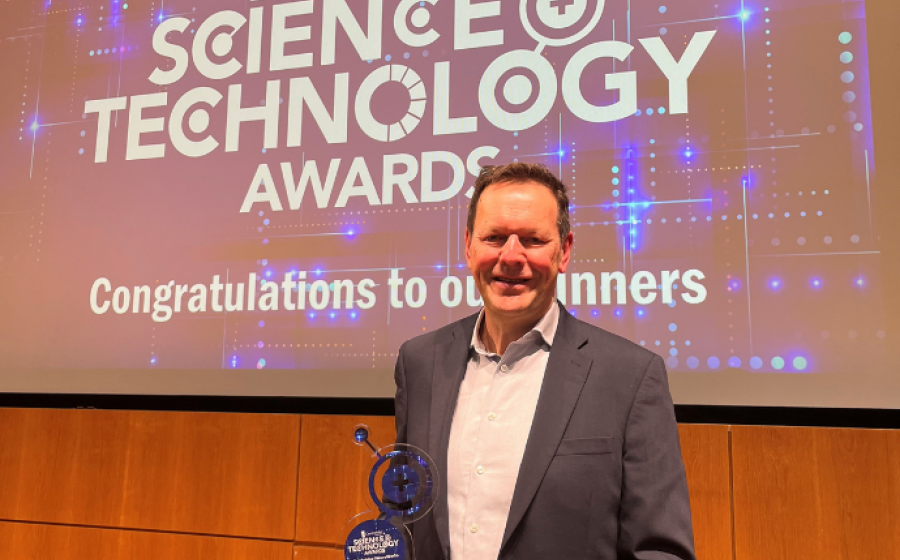
Cambridge NeuroWorks has been named winner of the “Tech for Good” Award at the Cambridge Independent Science & Technology Awards 2026, recognising its rapid progress in accelerating breakthrough neurotechnologies with the potential to transform millions of lives.
At a prestigious ceremony held at Hinxton Hall on the renowned Wellcome Genome Campus on 7 May, Cambridge NeuroWorks was recognised alongside some of the Cambridge region’s most influential innovators, researchers and business leaders for its contribution to science and technology innovation.
Powered by the UK R&D funding agency Advanced Research and Invention Agency (ARIA), Cambridge NeuroWorks - a consortium of nine partners - is working to build a future where neurological conditions no longer limit human potential.
Through its Fellowship programmes and community-building activities, the initiative supports the acceleration of next-generation neurotechnologies targeting conditions such as depression, dementia, chronic pain, epilepsy, and injuries to the nervous system.
It was a real pleasure to represent the consortium at yesterday’s awards. The award recognises not just the ambition of the programme, but also the pace at which we have come together and begun to make an immediate impact on such important societal challenges.
John Gourd, CEO, Cambridge Network and Cambridge NeuroWorks Community and Network Lead
Since launch, the programme has attracted close to 400 applications from neurotechnology innovators. Its inaugural cohort of six Fellows has now completed a 12-month programme of dedicated mentoring, expert guidance and access to the Cambridge NeuroWorks ecosystem to refine and translate their ideas towards patient impact.
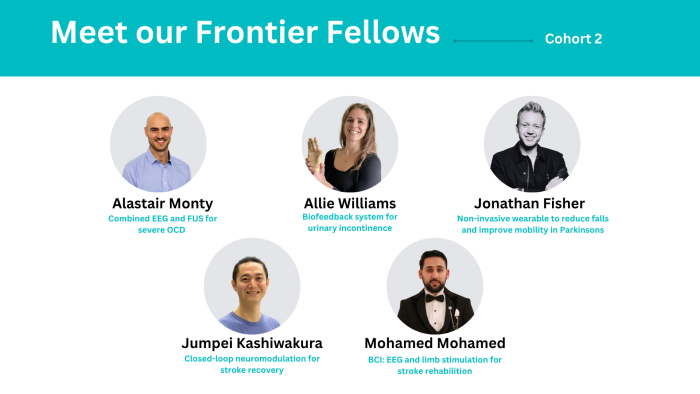
A second cohort of 11 Fellows is now underway, effectively doubling the programme’s reach and further accelerating the translation of early stage neurotechnology into real-world solutions.
Alongside the Fellowships, the initiative offers a flexible part-time “What If” strand to support innovators alongside their existing commitments, as well as a “Proof-of-Concept” funding call designed to enable rigorous exploration of bold, early-stage neurotechnology ideas.